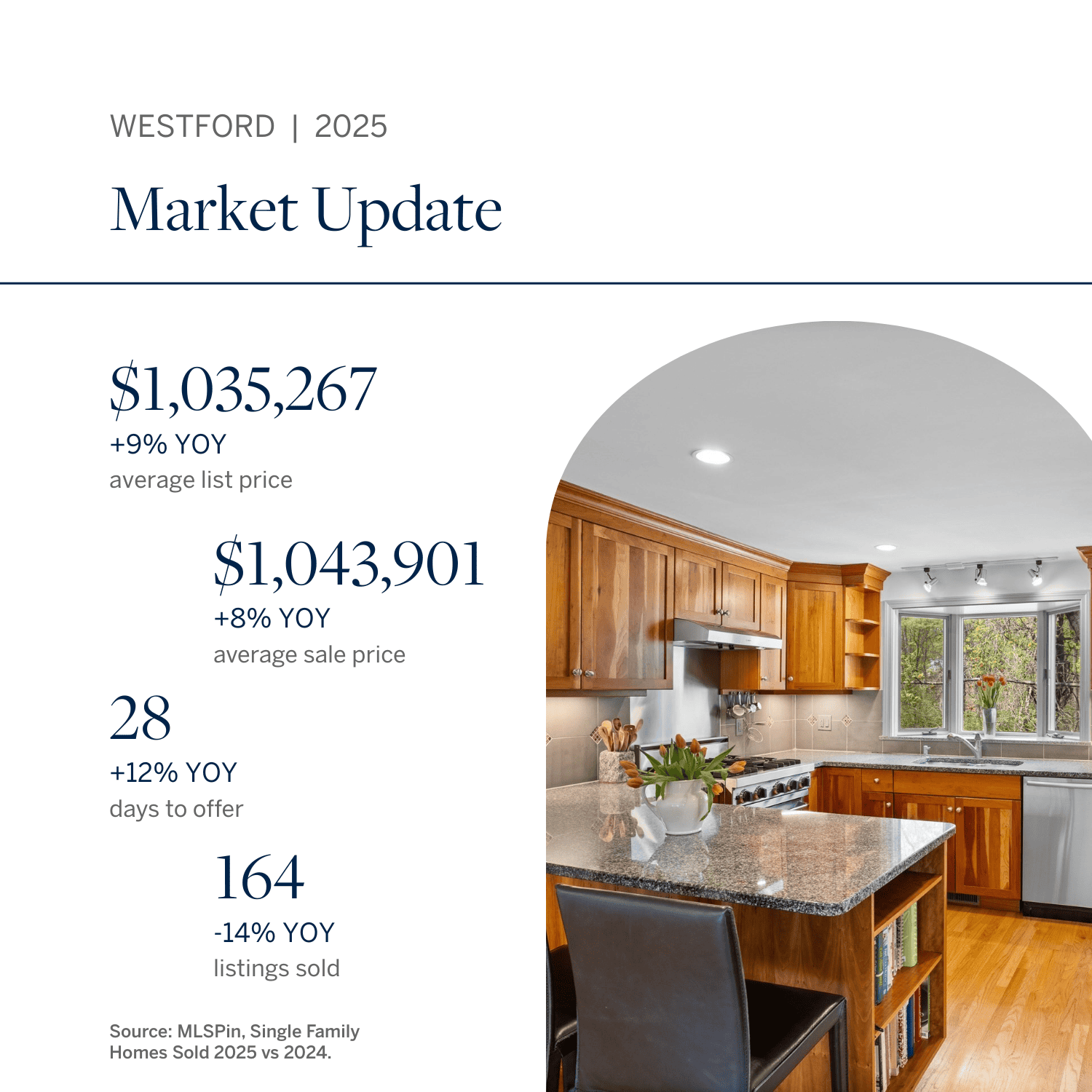
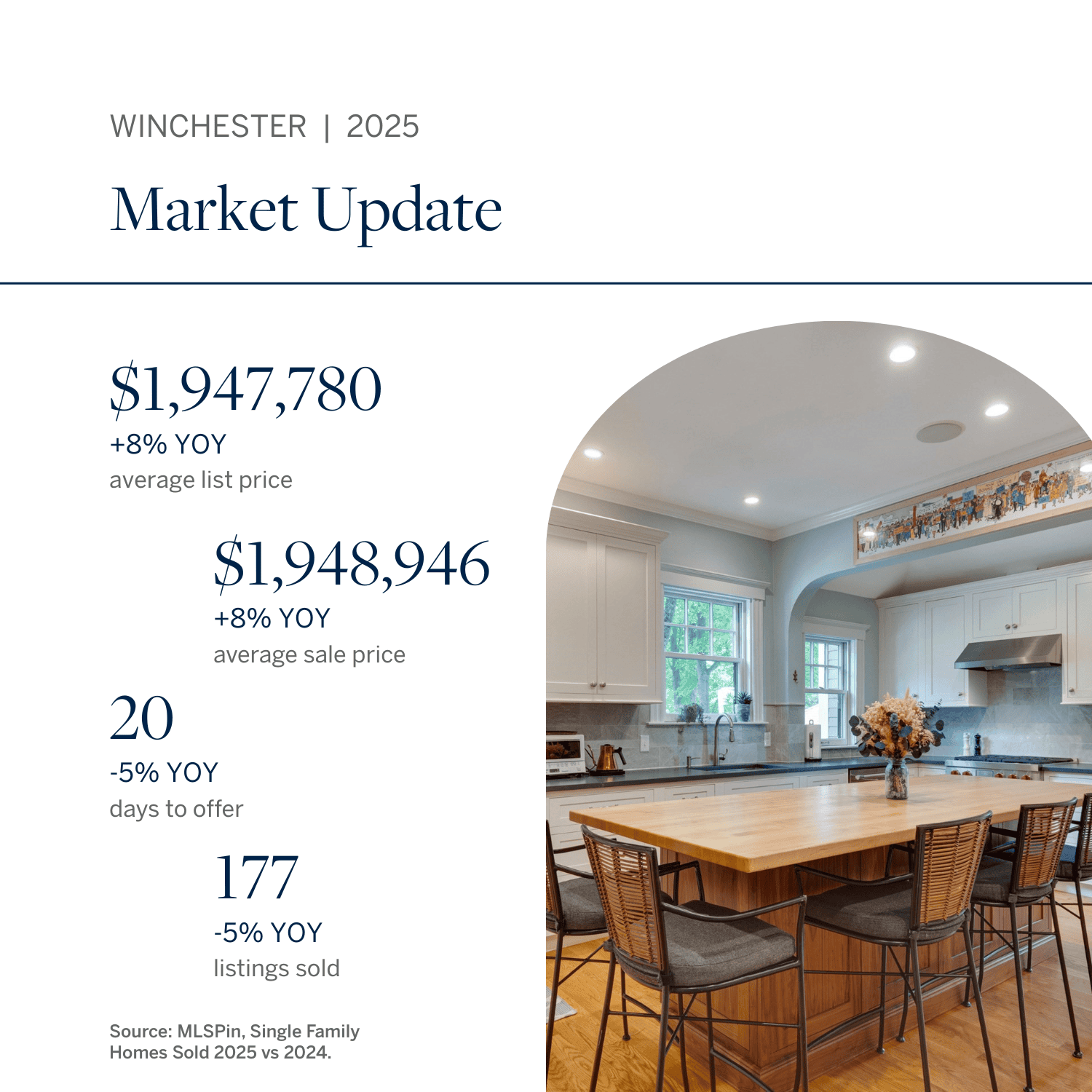
 Looking back at 2025, the real estate market across Boston’s Northwest Suburbs remained active and competitive, building on the steady growth we saw in 2024. Prices continued to rise in most towns, homes still sold at or above asking on average, and buyer demand remained present throughout the year. What changed was the pace: compared to the quicker-moving market of 2024, buyers generally took more time to make decisions, placing greater emphasis on value, condition, and long-term fit.
To better understand how these shifts played out locally, let’s take a deeper dive into single-family home sales and the trends they reveal about overall market conditions.
Prices Continued to Rise Across the Board
One of the clearest takeaways from 2025 was that prices moved higher across most communities, building on gains from the prior year.
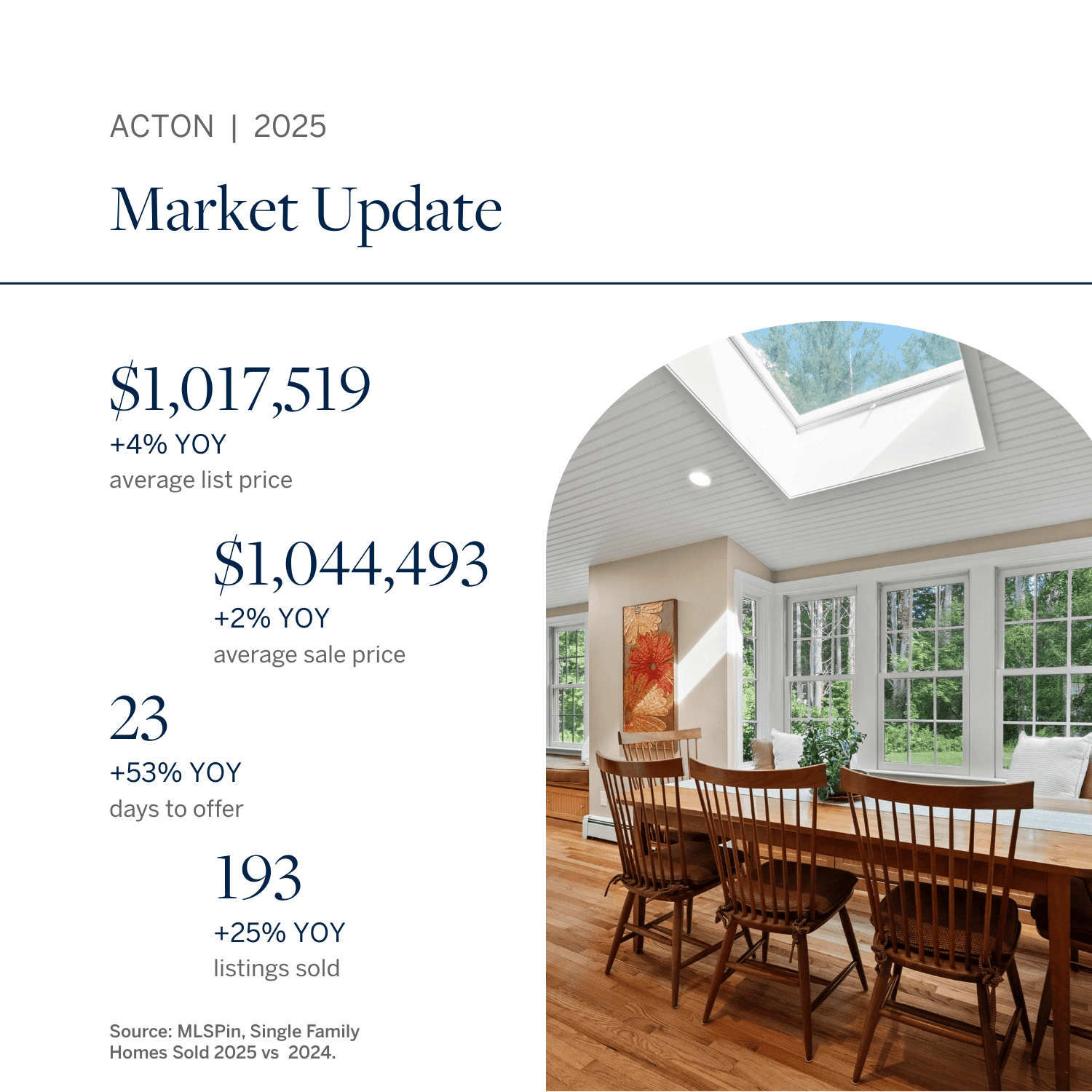
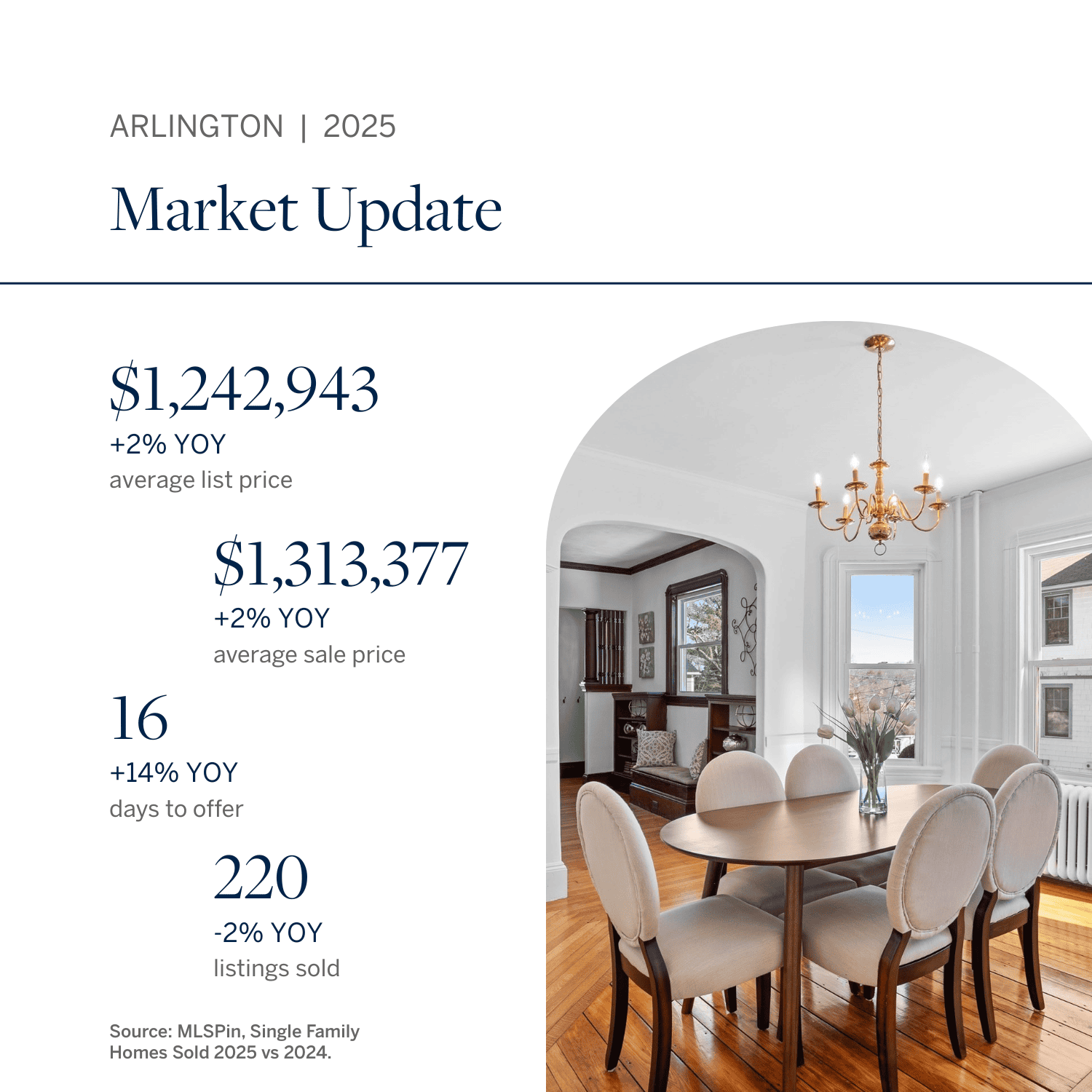
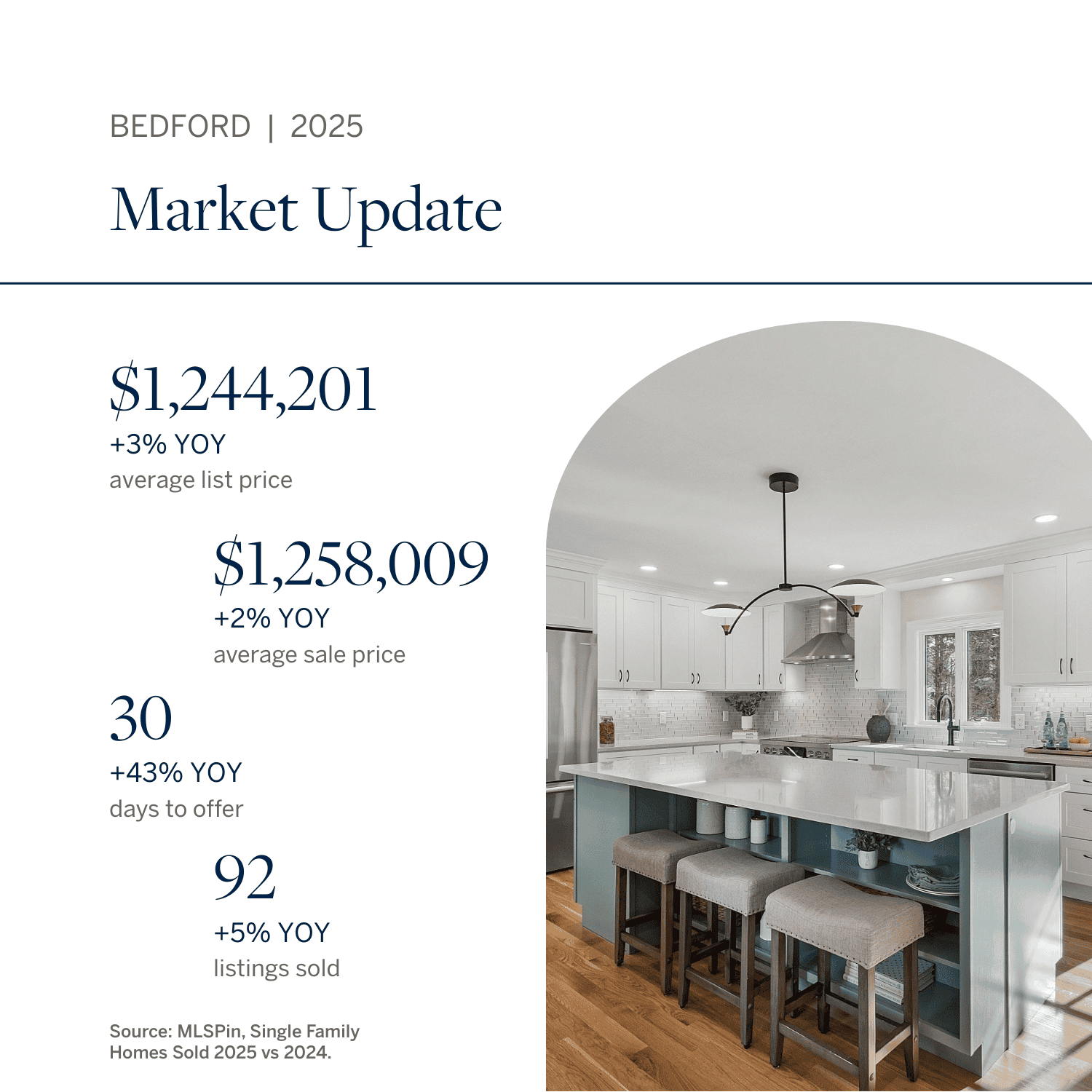
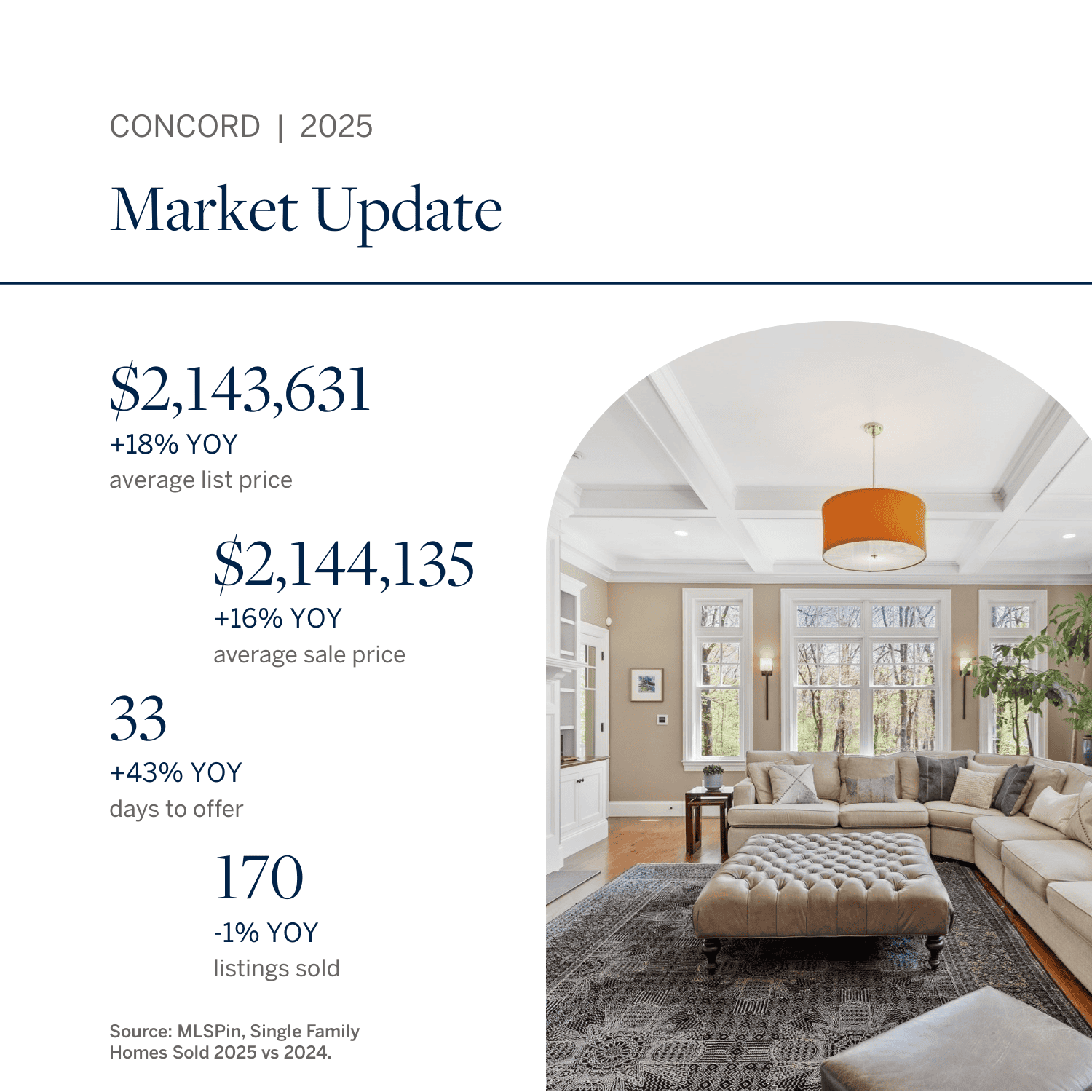
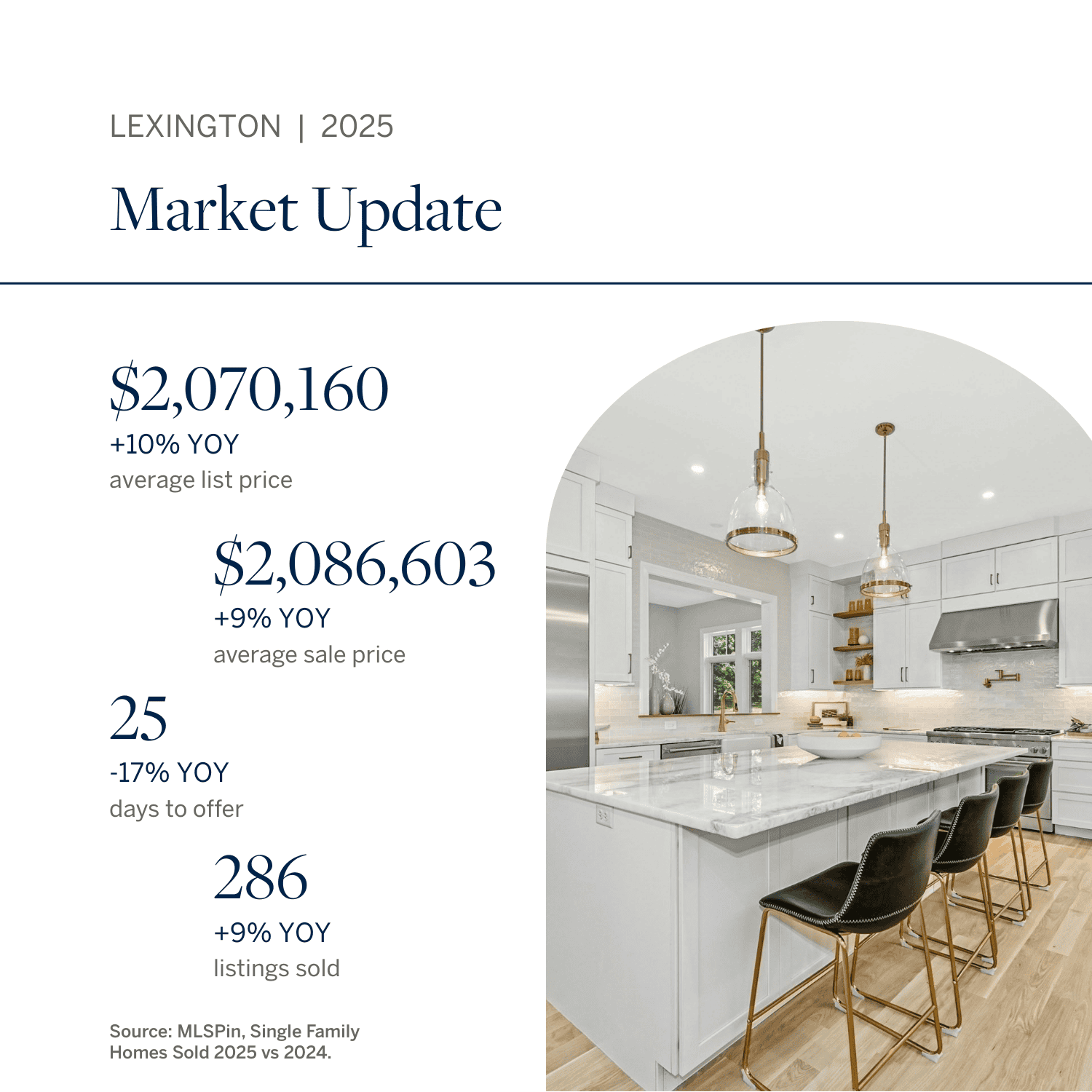
Average sale prices increased across the region, ranging from low single-digit gains in more balanced markets like Acton and Bedford to high single-digit and double-digit growth in stronger-performing towns such as Lexington and Concord, where average sale prices rose by roughly 9–16% year over year. Median prices followed a similar pattern, with many towns posting increases in the 7–13% range.
Even where appreciation was more modest, pricing remained stable, reinforcing that 2025 was not a year of pullbacks, but one of steadier, more sustainable growth.
Buyers Took More Time — and Were More Intentional
Buyer behavior shifted noticeably in 2025, most clearly reflected in days to offer.
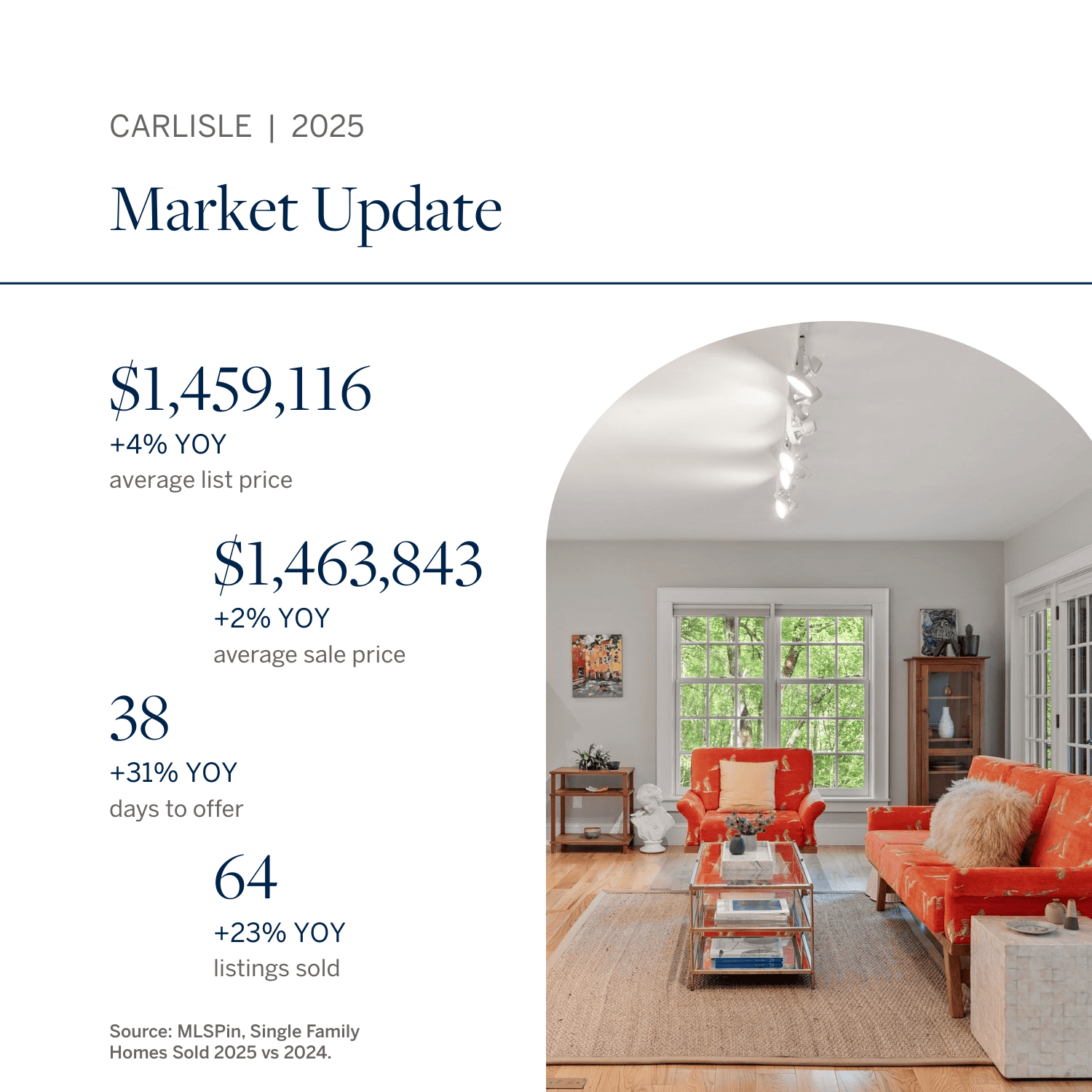
In towns such as Acton and Bedford, buyers took significantly longer to commit, with days to offer increasing by more than 40–50% compared to 2024. Concord and Carlisle showed similar patterns, highlighting a more careful and evaluative approach to purchasing.
At the same time, urgency didn’t disappear everywhere. Lexington stood out as an exception, with days to offer declining year over year — a reminder that well-priced homes in highly sought-after markets continued to move quickly.
Overall, buyers remained active throughout the year, but they were far less rushed than in prior markets.
Homes Still Sold Close to Asking — With Fewer Extremes
Despite longer decision timelines, competition remained a defining feature of the 2025 market.
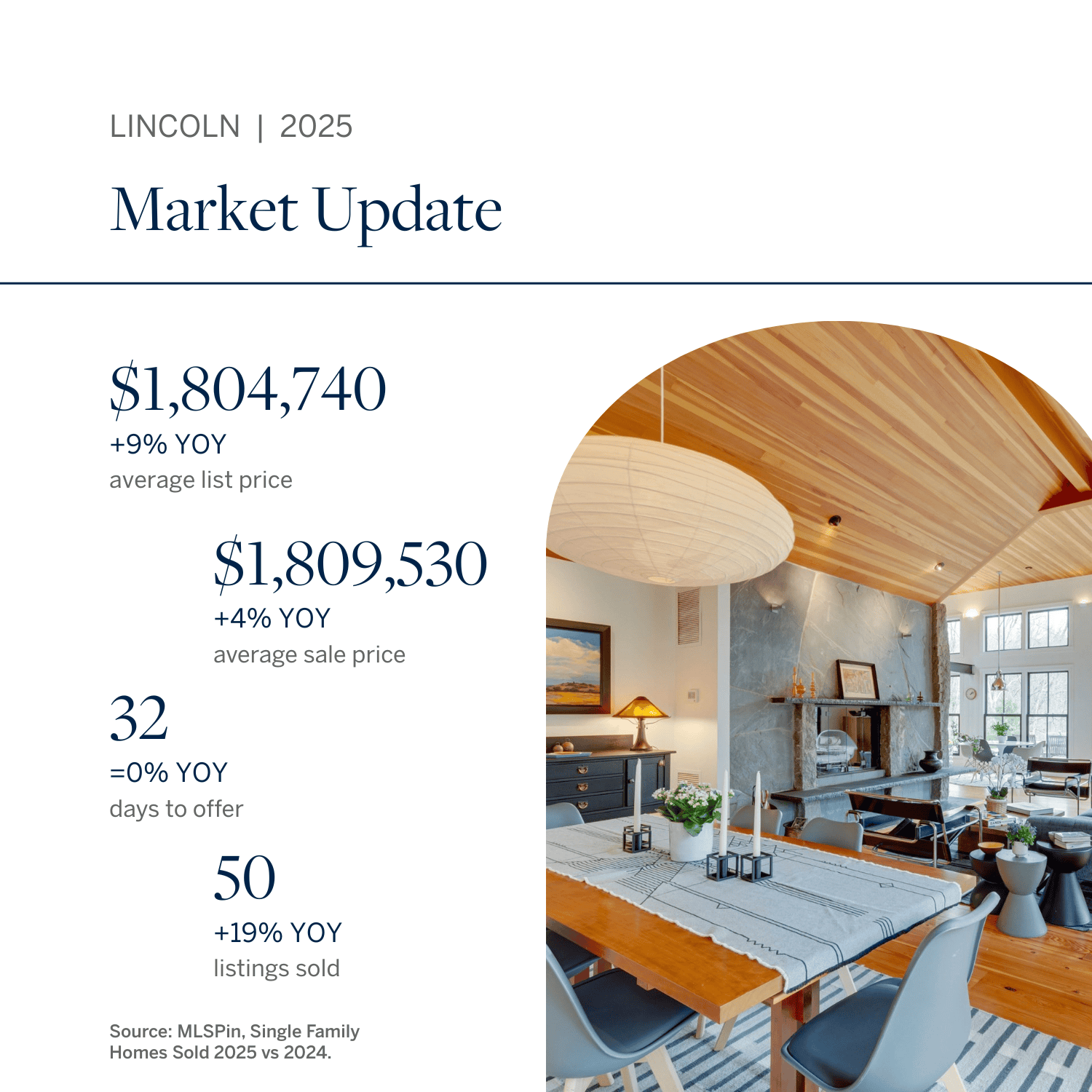
Across most towns, homes sold for an average of 101–103% of list price, only slightly below 2024 levels. In communities like Arlington, sale-to-list price ratios remained among the strongest in the region, while towns such as Lincoln and Westford saw modest softening of one to two percentage points.
This shift reflected a more balanced dynamic between buyers and sellers. Bidding wars became less common, but homes that were priced correctly and well presented continued to attract strong interest and sell close to — or above — asking.
Market Volume Was Driven by Activity, Not Pricing
Changes in total market volume during 2025 were shaped far more by how many homes sold than by changes in value.
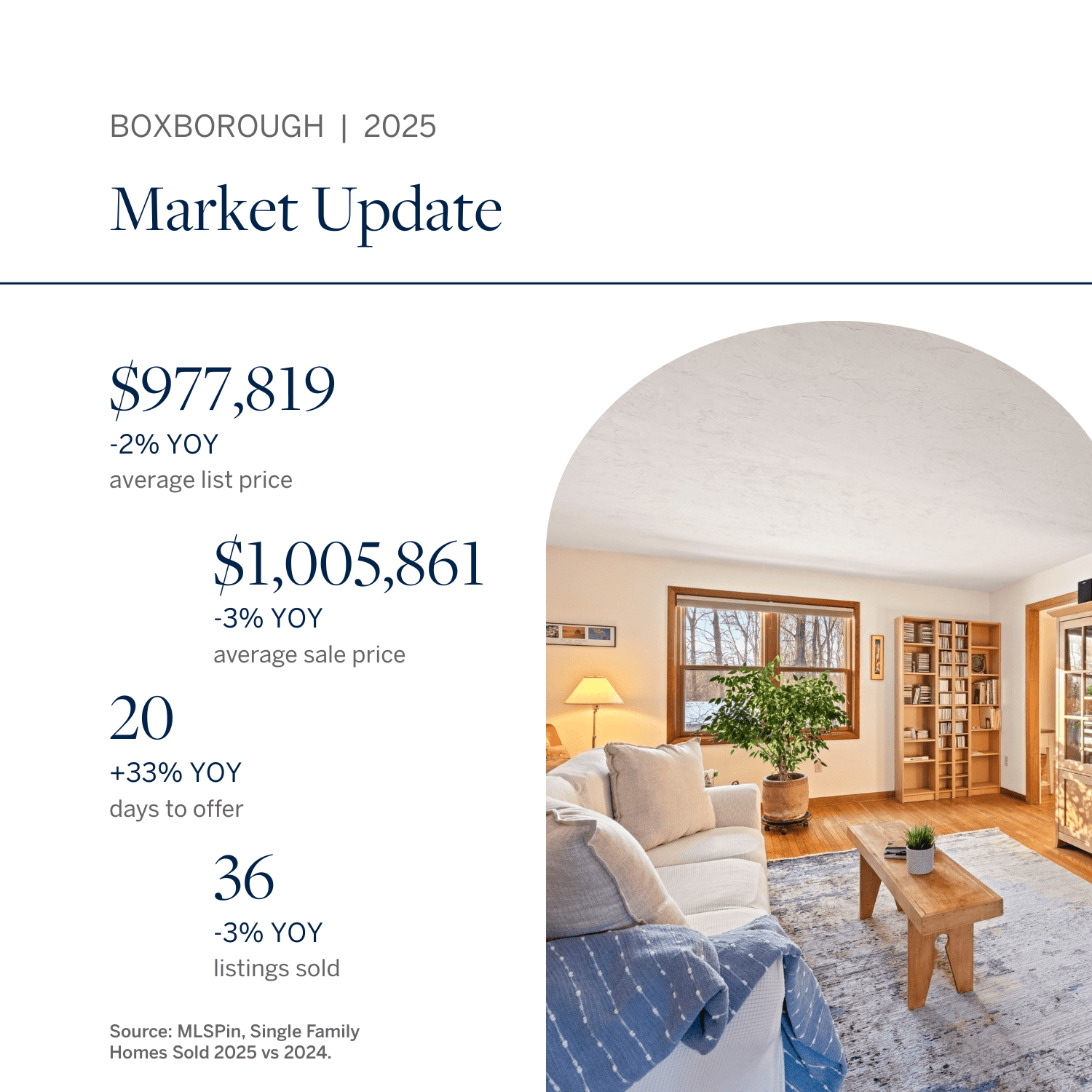
In towns such as Lexington and Concord, higher market volume reflected a combination of rising prices and increased transaction counts. By contrast, communities like Westford and Boxborough saw total volume dip year over year, despite stable or rising prices, simply because fewer homes changed hands.
This pattern played out across the region and underscores an important point: most year-over-year swings in market volume were driven by shifts in activity levels, not by weakening home values.
Looking Ahead to 2026
As we move into 2026, the market is already showing signs of renewed momentum. With interest rates stabilizing, many forecasts suggest we may be heading into one of the busiest spring markets in recent years, fueled by pent-up demand from buyers who paused during 2024 and 2025.
Whether you’re watching increased activity in towns like Lexington and Concord or seeing momentum build in more balanced markets such as Acton and Bedford, understanding how these trends affect your specific situation will be key. If you’re considering a move this year, reach out to your local real estate expert to find out how the evolving 2026 market could impact your plans — and how to position yourself for success in what’s shaping up to be a very active spring.