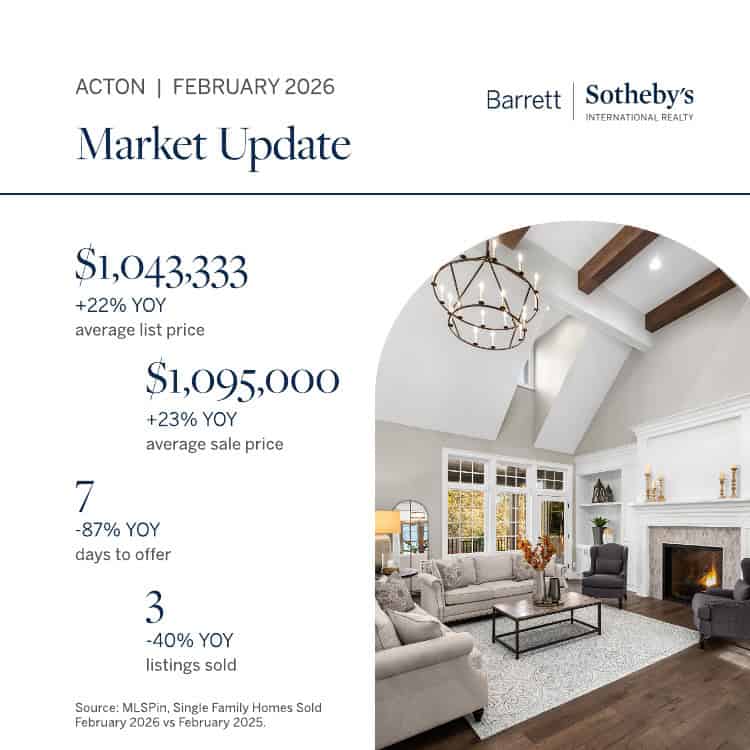
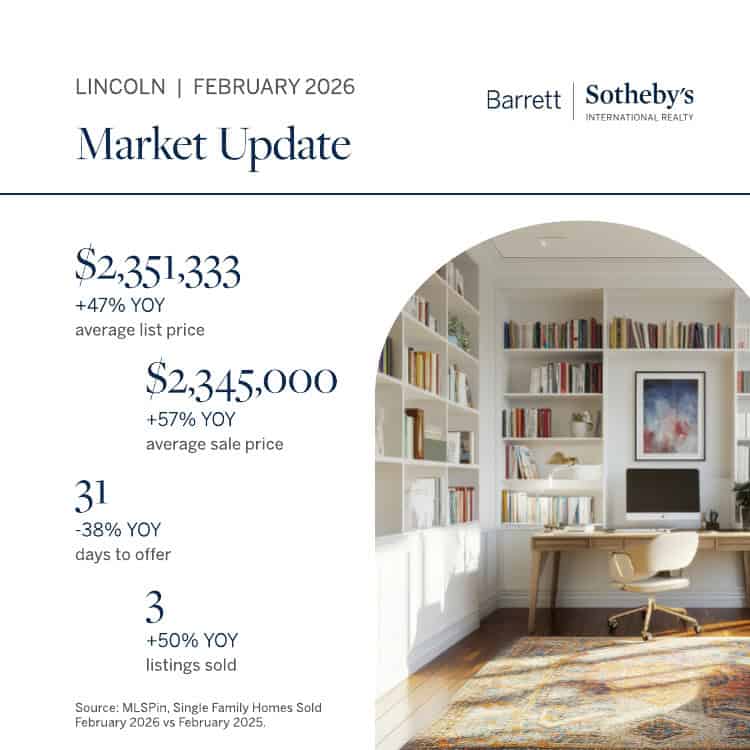
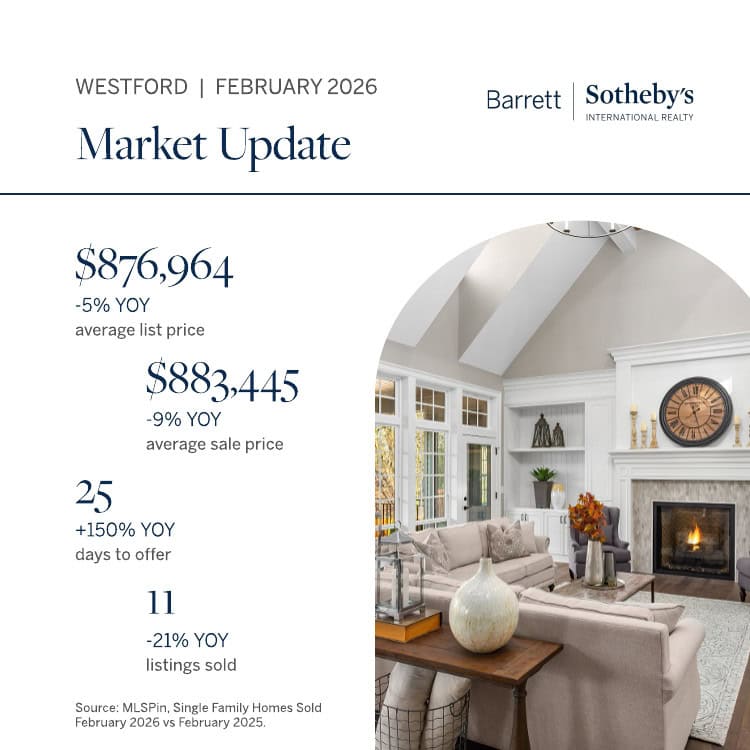
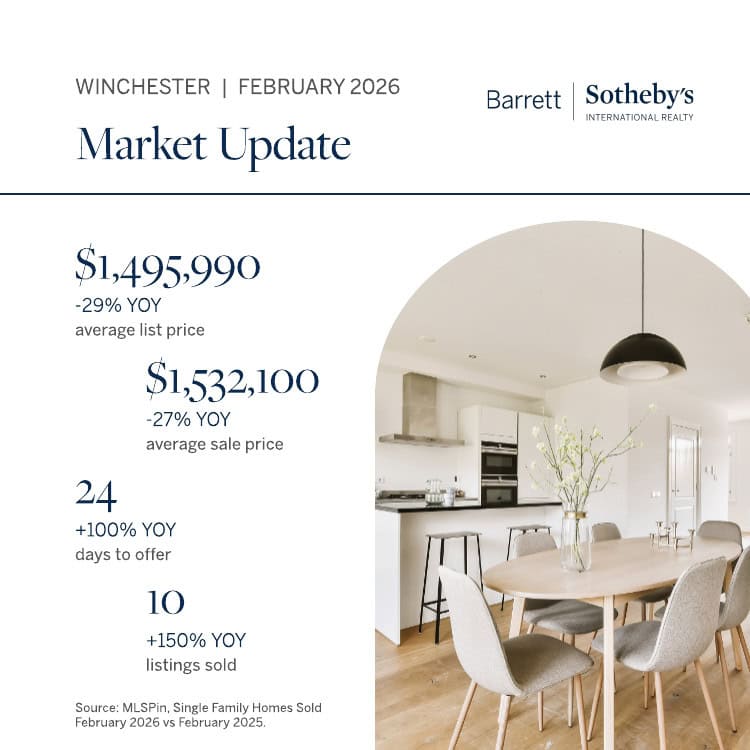
 The February single-family market across Boston’s Northwest Suburbs reflected a clear theme: selective pricing adjustments paired with strong buyer urgency in well-positioned homes. While several higher-priced communities saw year-over-year price pullbacks, buyer demand did not disappear — it simply became more strategic. In towns like Acton, average sale prices rose more than 20% compared to last February, while homes went under agreement in just seven days on average, a dramatic acceleration from last year. This signals that buyers are prepared to move quickly when value aligns with expectations.
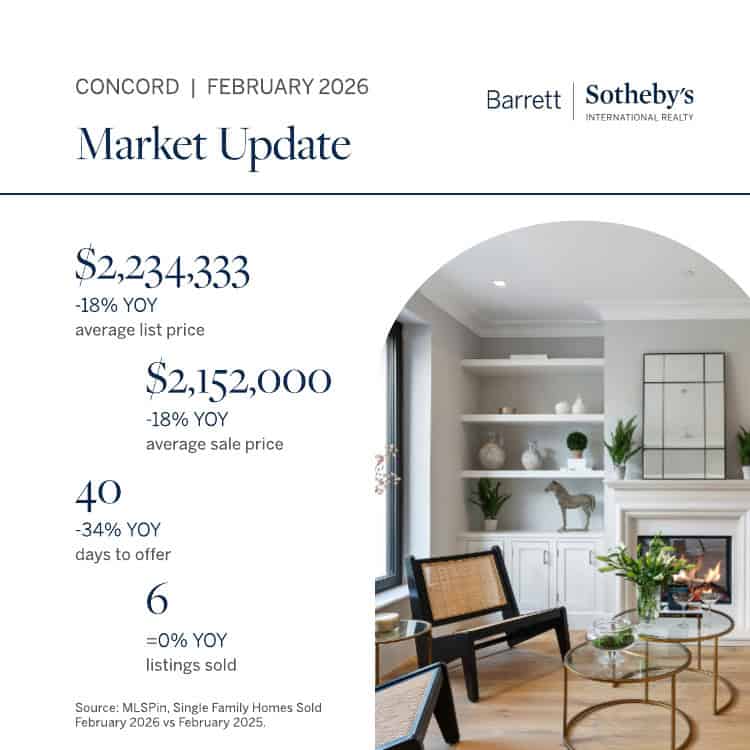
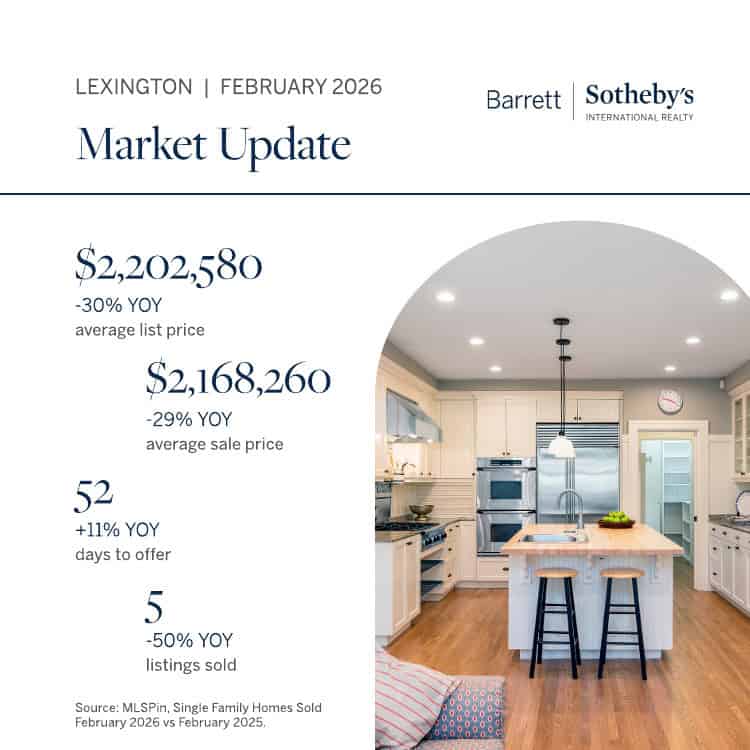
At the upper end of the market, pricing recalibration was more noticeable. Lexington and Concord both experienced year-over-year declines in average sale price, reflecting a shift from the elevated peaks of early 2025. However, this does not indicate stalled activity. Concord maintained steady listing volume and healthy engagement, while Lexington homes continued to sell at or near asking price. These adjustments suggest a market finding balance rather than losing momentum.
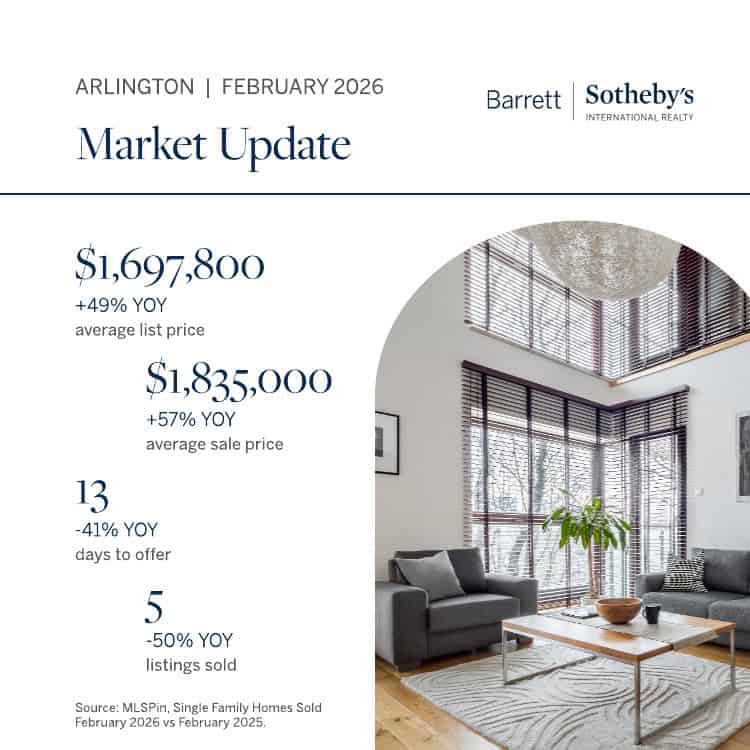
Inventory levels played a significant role in shaping February’s results. Lincoln and Arlington both saw substantial price increases, driven in part by limited supply. Arlington, in particular, stood out with both higher median pricing and strong sale-to-list ratios, reinforcing that competitive conditions persist when desirable homes come to market. Meanwhile, towns like Bedford and Westford saw softer pricing but faster transaction timelines compared to last year, underscoring that demand remains present even where values moderated.
Speed remains one of the defining characteristics of this market. Homes in Acton and Bedford moved dramatically faster than a year ago, with days on market cut nearly in half. Even in towns where overall volume declined, buyers acted decisively when inventory aligned with their needs. The overarching takeaway is that February was less about broad appreciation or decline and more about hyper-local dynamics, pricing precision, and supply constraints.
While single-family homes set the tone, the condo market showed more varied performance. Some communities, such as Bedford, saw notable increases in condo pricing and volume, while others, including Lexington, experienced year-over-year slowdowns. As always, condo trends are highly inventory-driven and can shift quickly. If you’d like a deeper dive into condo data — or insight into towns not included here — our team is happy to provide a customized breakdown. Reach out to us to discuss how these February trends may impact your moving plans this spring.