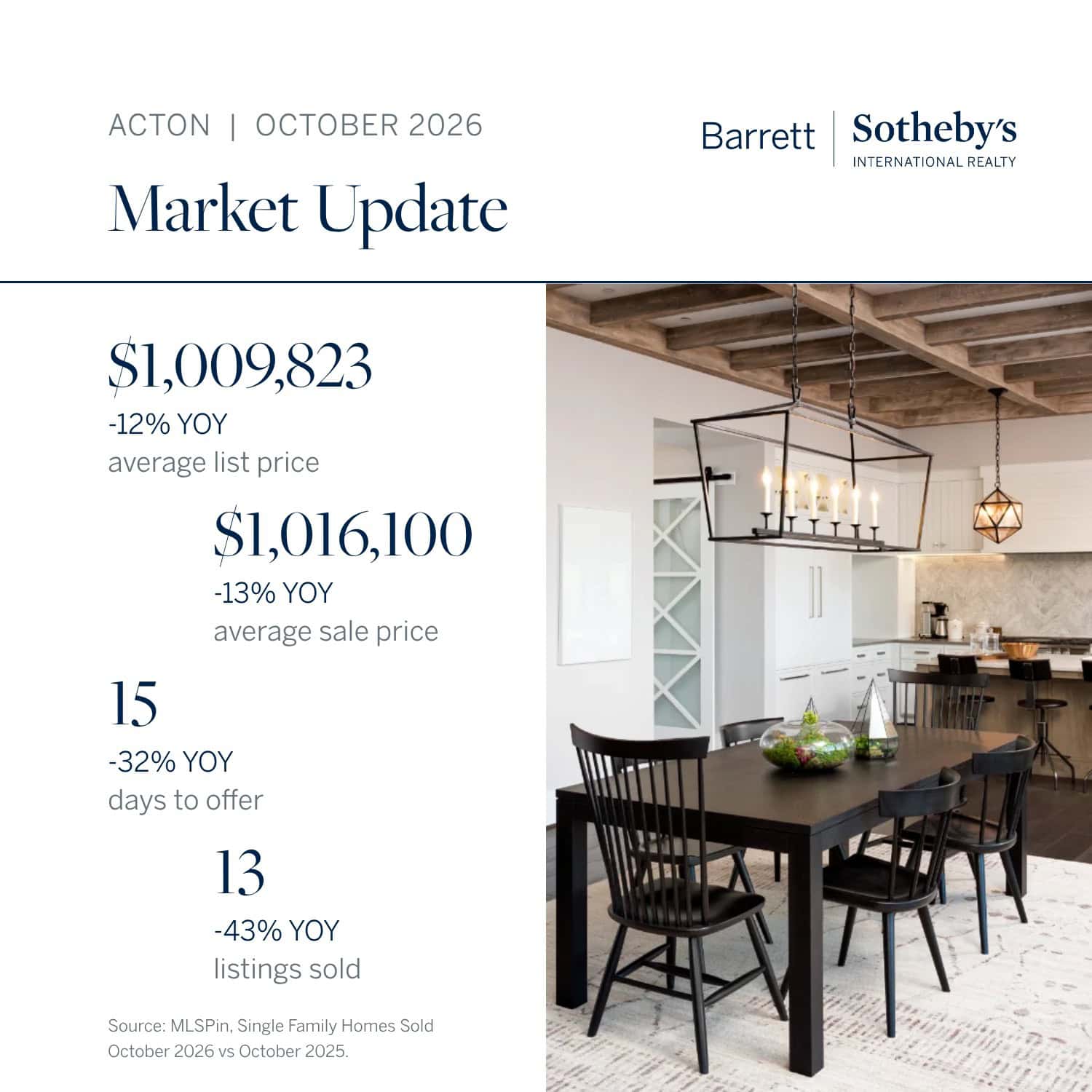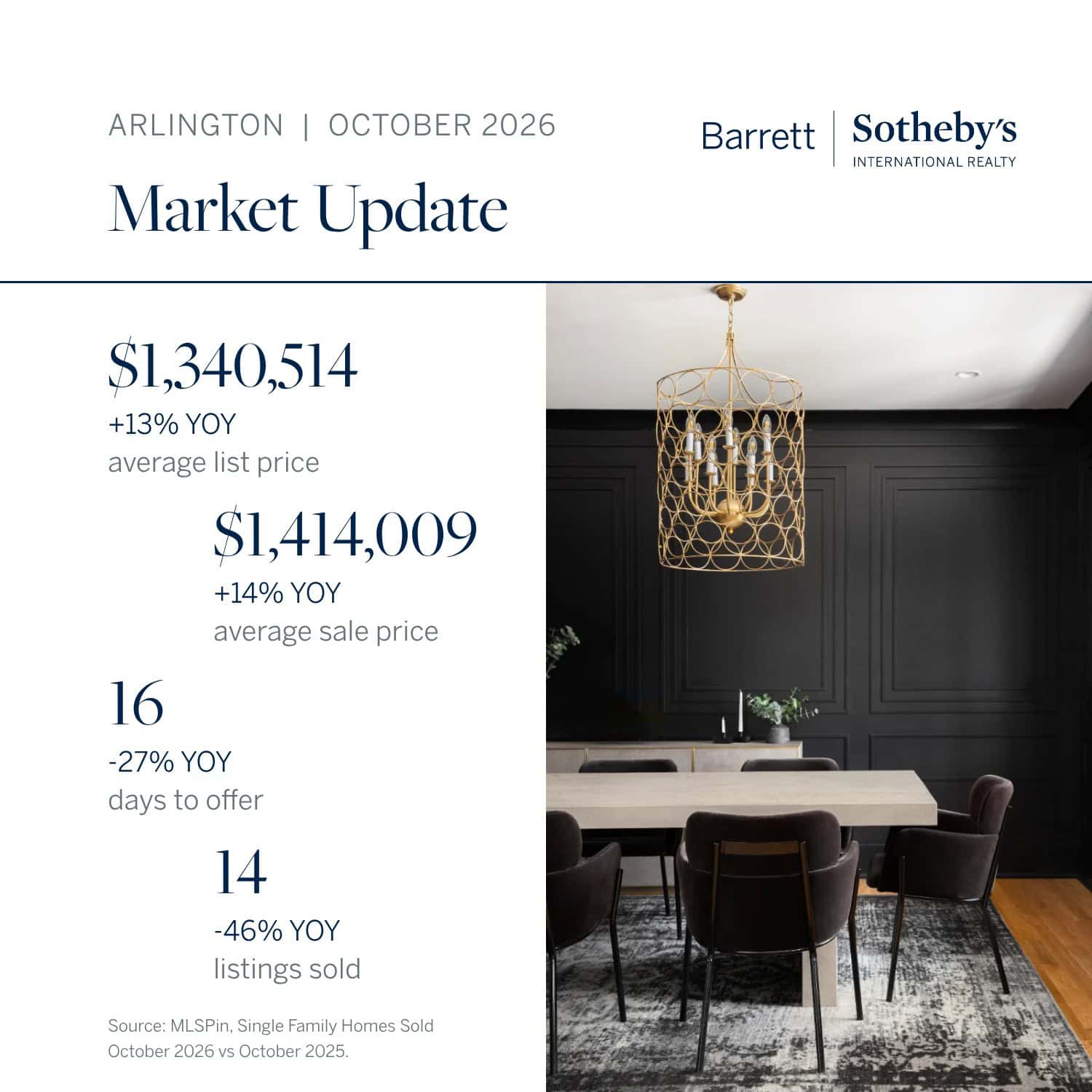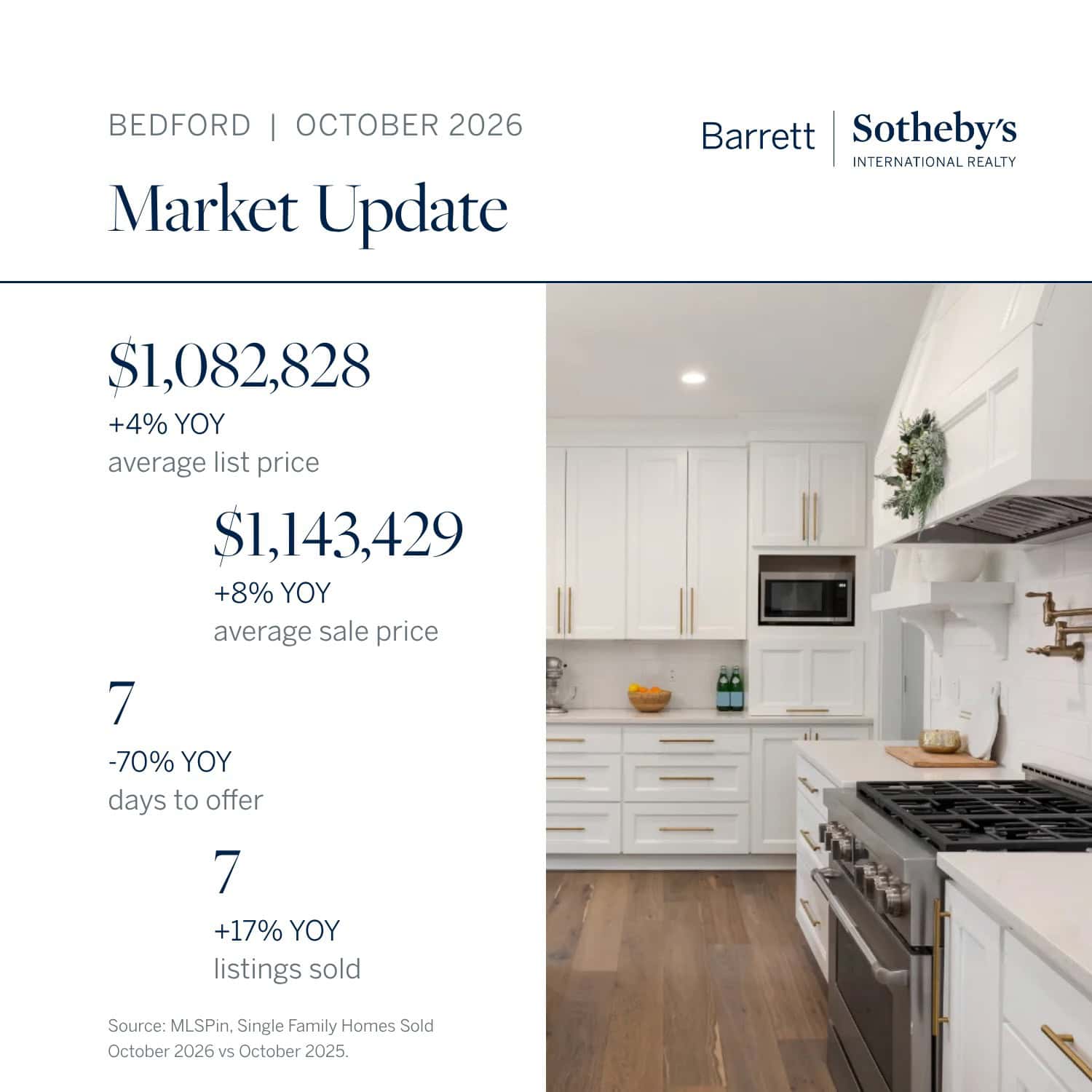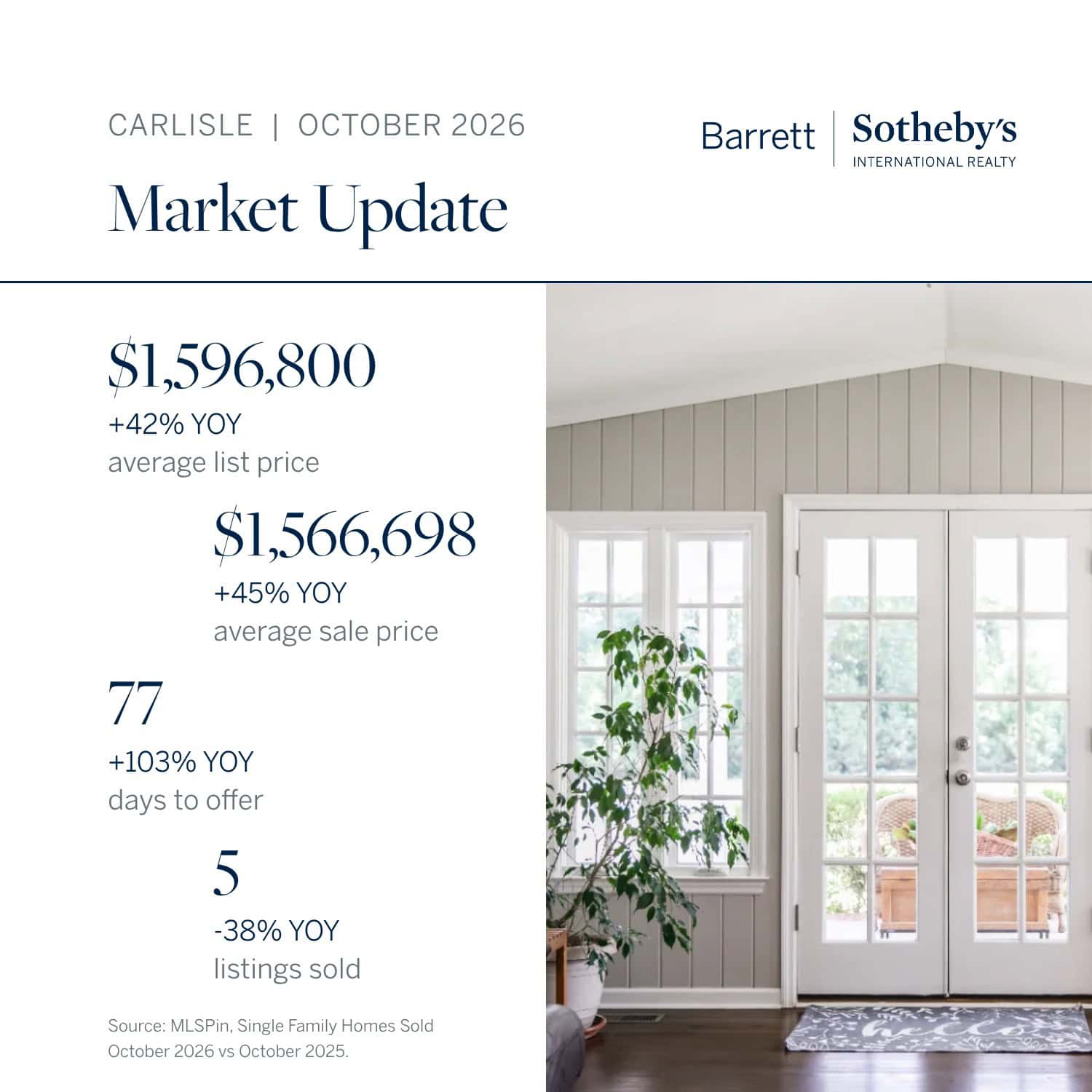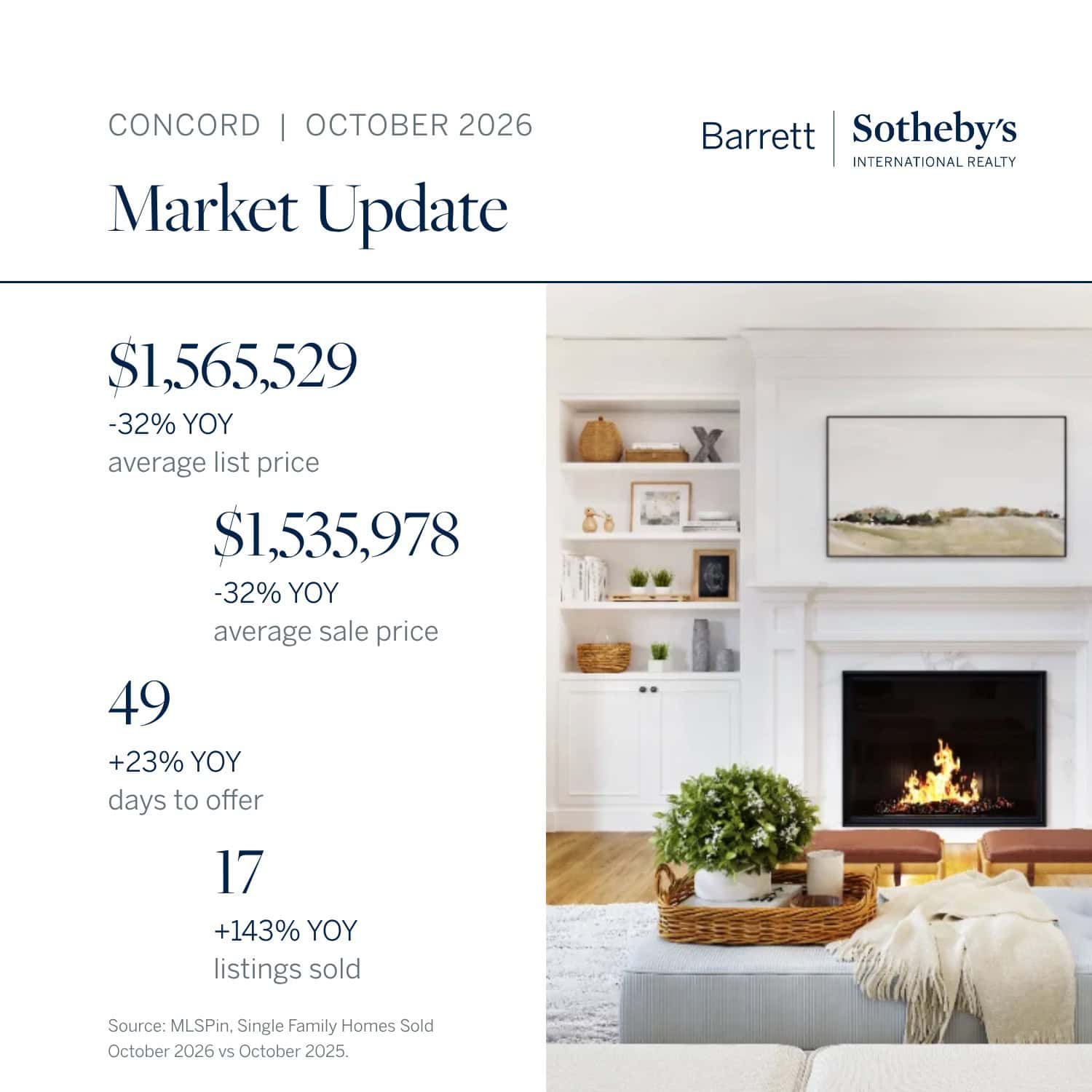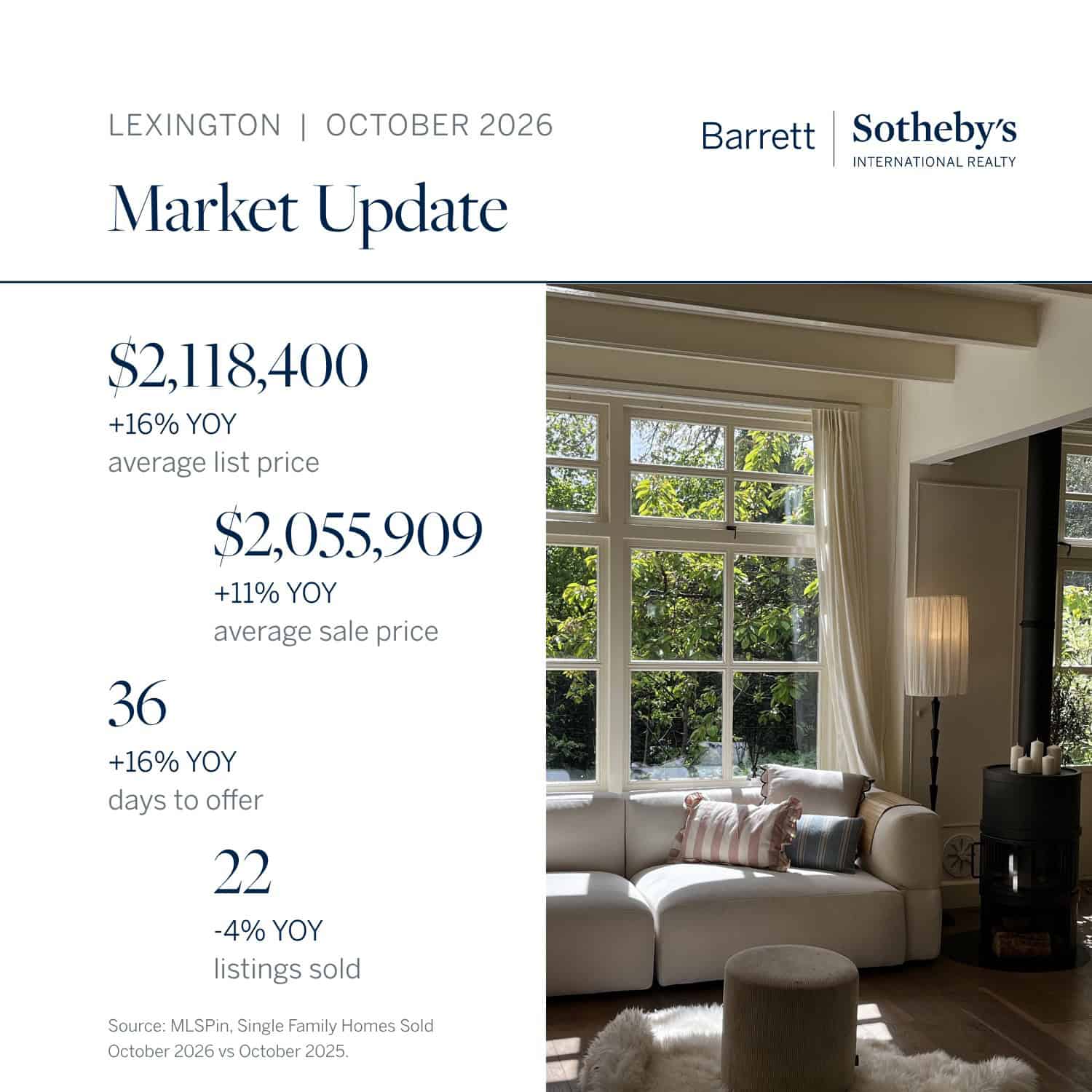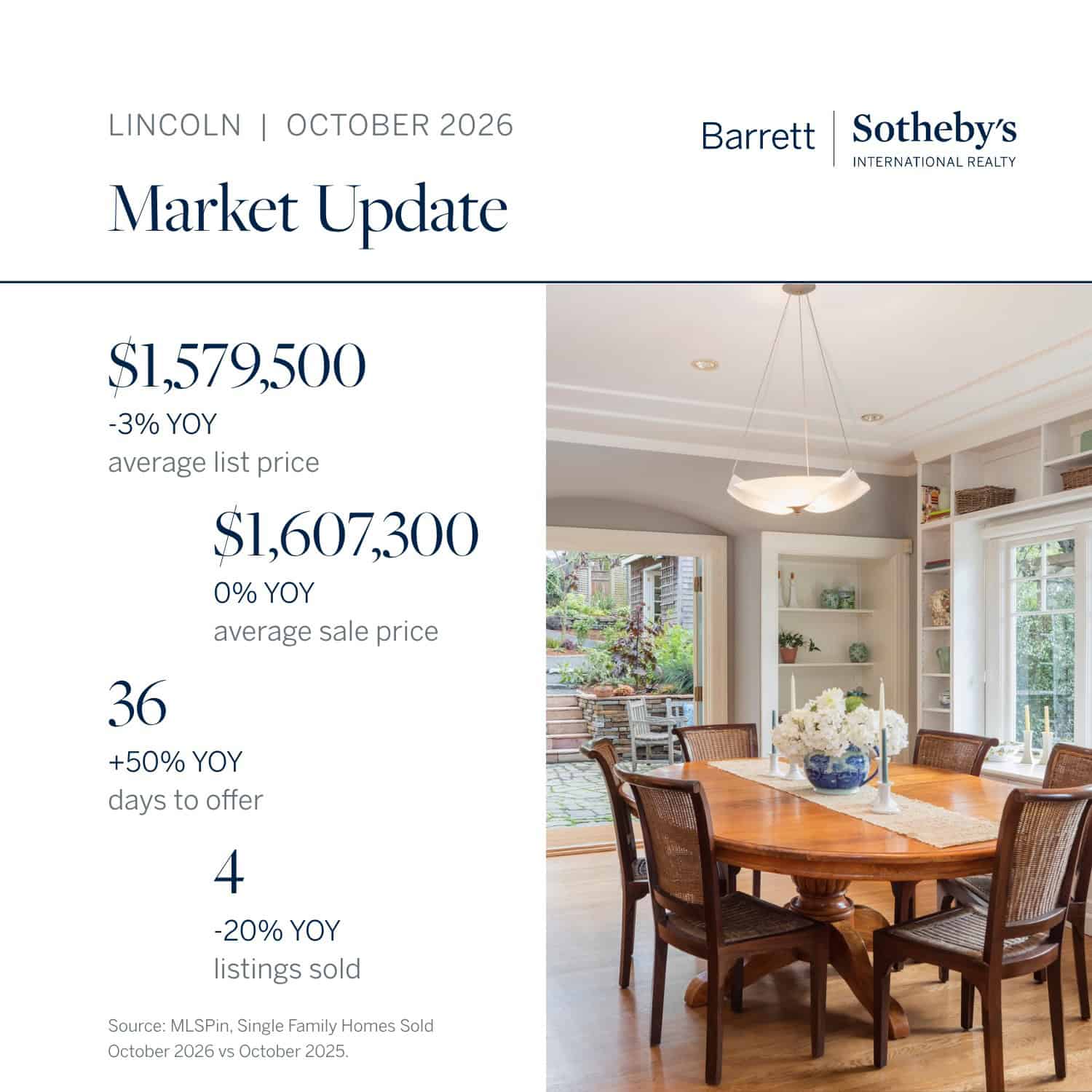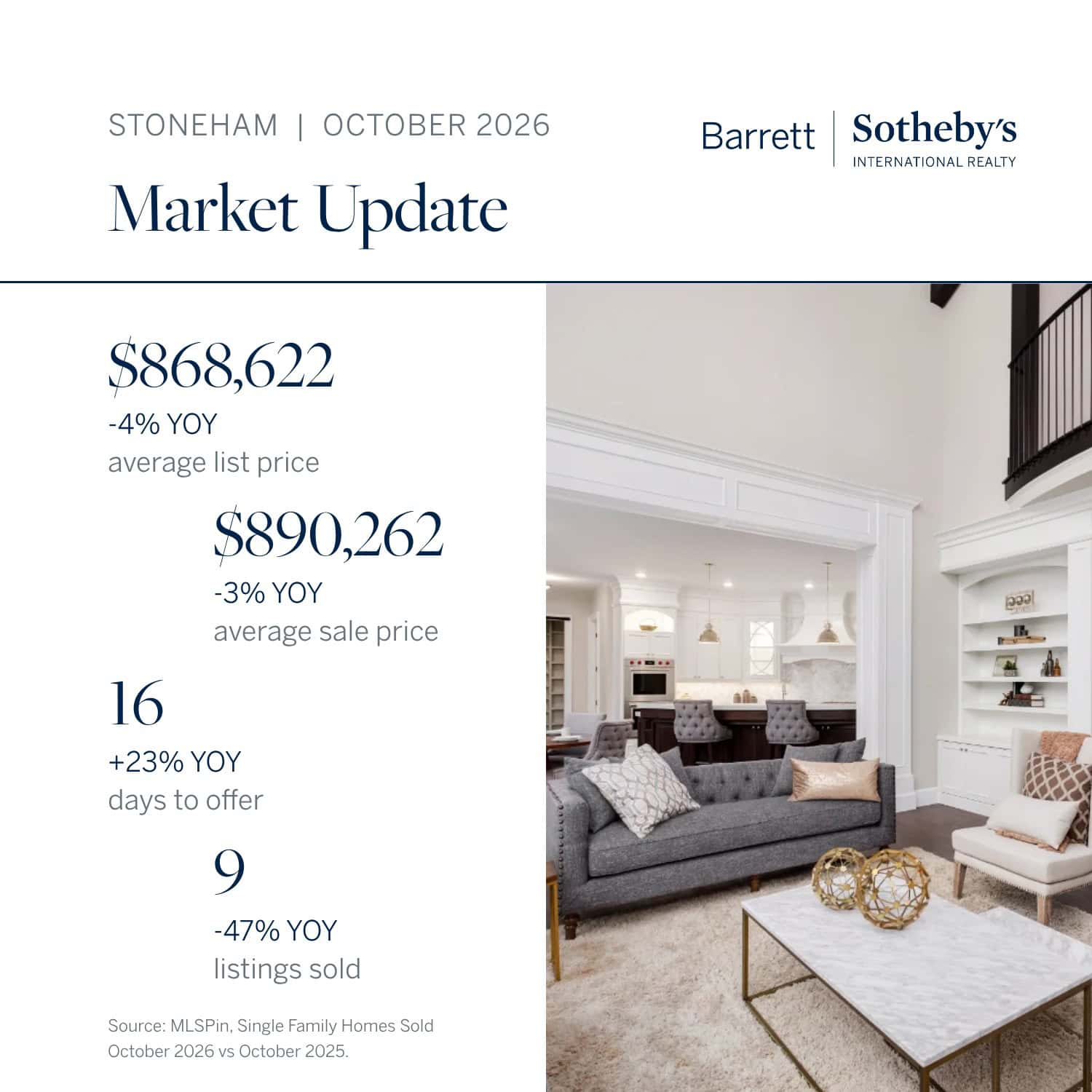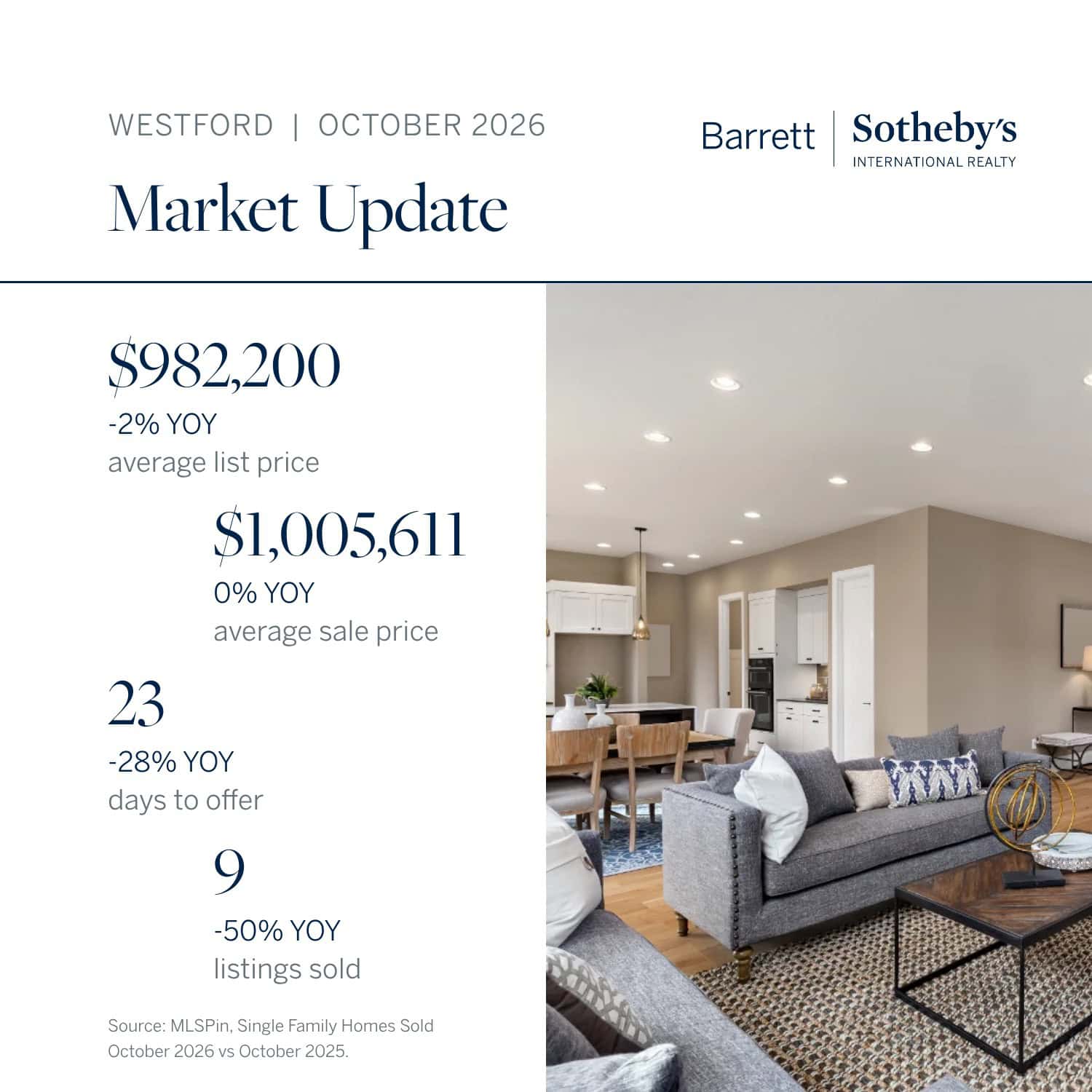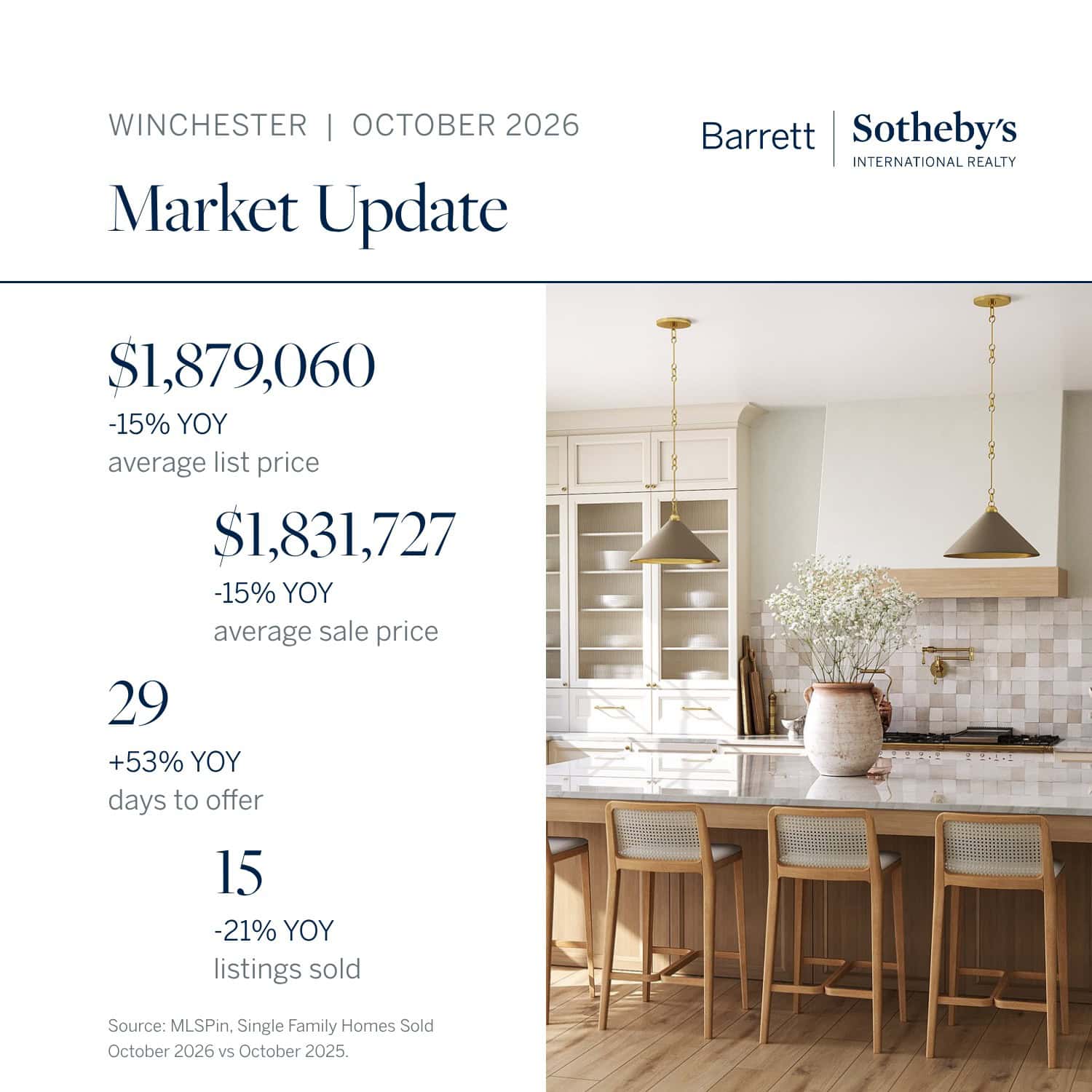
October’s sales numbers point to an increasingly selective fall housing market across Boston’s northwest suburbs. Activity remained strong in some communities, and well-positioned homes continued to attract competition, but results varied considerably by property and location. One of the clearest patterns this month was the relationship between how quickly a home secured an offer and where it ultimately sold in relation to its asking price.
Homes that attracted buyers quickly generally achieved stronger sale-to-list results. In Bedford, single-family homes took an average of just 7 days to receive an offer and sold for 107% of asking price. By comparison, Lexington homes averaged 36 days to offer and closed at 98% of list price. While every property is different, the October numbers reinforce the importance of getting pricing and positioning right from the start.
That pattern becomes more interesting when we compare October with September. In several of our markets, homes secured offers faster: Acton improved from 25 days to offer in September to 15 in October, while Winchester improved from 39 days to 29. Although average sale prices were lower year over year in some towns and higher in others, there is no consistent pattern of falling prices across the region. Instead, the stronger relationship is between how quickly homes attracted buyers and how closely they sold to asking price — suggesting that homes priced in line with buyer expectations are moving more quickly and with less negotiation.
The year-over-year comparison also suggests this is not simply the usual fall slowdown. In Bedford, homes took an average of 23 days to secure an offer last October compared with just 7 this year, while the sale-to-list ratio increased from 102% to 107%. In Concord, the opposite pattern emerged: days to offer increased from 40 to 49, with homes closing at an average of 99% of asking in both years. The difference between communities points to a market being driven less by seasonality alone and more by the individual property, its price and the competition around it.
Sales activity was similarly uneven. Concord increased from 11 single-family closings in September to 17 in October, while Westford moved in the opposite direction, falling from 22 closings to 9. Looking year over year, Westford also recorded half as many October sales as in 2025. Rather than a uniform regional slowdown, buyers appear to be concentrating their activity where the right opportunities are available.
For both buyers and sellers, October reinforces a trend we have been watching throughout the fall: there is still strong competition for homes that buyers perceive as offering the right combination of value, condition and location, but the market is less forgiving when those elements are not aligned. For sellers, thoughtful pricing and positioning from the outset can help generate earlier interest and stronger offers. For buyers, a home attracting immediate attention may still require a competitive approach, while properties that have been available longer may offer greater room for negotiation.
If you are considering a move, talk to one of our local real estate advisors about what these trends mean for your home and your plans.